The Rhythm Flowing Within Us
Understanding the Female Biological Rhythm
Have you ever heard the phrase "slave to hormones"?
It highlights how significantly hormonal changes affect both the body and emotions. The reason why many women feel down or physically sluggish as their period approaches is largely due to these hormonal shifts. By understanding your menstrual cycle and the changes your body goes through, you can better manage and improve your daily life.
The first step to achieving this is accurately understanding your body’s internal rhythm. A woman’s body experiences fluctuations in sex hormones over a 28-day cycle, leading to various physical changes. PMS (Premenstrual Syndrome) symptoms can begin 7 to 10 days before menstruation, with each person experiencing different effects.

What is PMS (Premenstrual Syndrome)?
PMS (Premenstrual Syndrome) includes around 150 known symptoms and can vary greatly from person to person and cycle to cycle. In severe cases, it can be disruptive enough to affect daily life. Fortunately, with proper attention and care in daily routines, PMS symptoms can be improved.

Body Changes During Menstruation
During menstruation, a woman’s body becomes more sensitive and delicate. The breasts and lower abdomen may swell, and mild pain can be experienced. Body temperature slightly rises, and even smooth skin may become prone to breakouts, such as acne, due to heightened sensitivity. Here are some ways to prepare for maintaining physical and emotional balance during this sensitive time.

2. Steps for a Comfortable Menstrual Cycle
Preparing for Your Period
💊 Red, yellow, blue… When that time of the month approaches, we tend to become collectors of colorful painkillers. However, excessive use of pain relievers can lead to side effects on the digestive and nervous systems, often referred to as “my savior that comes to destroy me.” This is why addressing the root of the issue by improving daily habits is a better approach. Adopting healthy lifestyle habits not only helps reduce menstrual cramps but also significantly alleviates PMS symptoms.
Improving Eating Habits
Salt and caffeine can negatively affect blood circulation and have a detrimental impact during menstruation. Therefore, it’s best to avoid spicy, salty foods and ensure you're consuming enough carbohydrates and vitamins. For vitamin intake, eating fiber-rich fruits and vegetables is recommended, and having meals at regular times helps manage your condition effectively.
Improving Lifestyle Habits
Irregular sleep patterns and stress can disrupt proper hormone secretion, so it's important to avoid them as much as possible. If you're in a stressful situation, it's best to find an appropriate stress relief method that suits your personality.
Stress relief methods for introverts:

Relieving stress through meditation or light exercise

Relieving stress by enjoying books and reflecting on them
Stress relief methods for extroverts:

Relieving stress by going on food tours or enjoying eating shows

Relieving stress through upbeat music or exercise
Physical PMS and menstrual pain can be alleviated through muscle strengthening and improved blood circulation, so consistent care and exercise are essential. In particular, it's important to focus on lymph nodes, which help discharge accumulated water and waste from the body. How about preparing for a more comfortable menstrual period by wearing comfortable clothing that doesn't irritate the Y-zone and incorporating proper massage into your routine?
Tip: Abdominal Massage for Menstrual Pain Relief
STEP 1
- Relax your body and lie down comfortably.
- Bend both knees.
- Rub your palms together multiple times to warm them up.
- With warm hands, massage the entire abdomen in a clockwise direction 20 to 30 times.
STEP 2
- Divide your abdomen into three sections both horizontally and vertically.
- Press down on the abdomen in nine sections, from top to bottom, using your hands.
- Exhale through your mouth while pressing, and inhale through your nose when releasing.
- If you find any tight or knotted areas, press and rub those spots gently.
STEP 3
- Rub your palms together again and massage the entire abdomen in a clockwise direction 20 to 30 times.
3. Interview with a Specialist in Women's Medicine
An interview with Dr. K**, a specialist in women’s medicine, who is dedicated to promoting women's health and happiness.
Q1. I’ve heard that menstrual cycles vary from person to person. Is there a way to track your own cycle?
Yes, while the average menstrual cycle is about 28 days, it can vary slightly due to individual hormone levels or the condition of your body that month. It’s helpful to keep a record of your menstrual cycle and observe any changes in your body and emotions during this time. This allows you to prepare and respond appropriately to your body’s needs.
Q2. What preparations should be made for a healthy menstruation?
Since menstrual symptoms vary from person to person, it's important to prepare according to your own needs. However, most people experience fatigue, sensitivity, and bloating during menstruation, so it’s a good idea to create a comfortable environment where you can care for your body. Some may find it helpful to incorporate dietary changes, massages, or other methods to relieve pain. If the symptoms are severe, visiting a gynecologist for a personalized treatment plan can be very helpful. Also, using hygiene products that suit your body can significantly reduce discomfort and pain, making it easier to carry on with daily activities.
Q3. Any tips for choosing the right menstrual hygiene products?
The best product for you depends on your lifestyle, menstrual flow, and the activities you have planned for that day. Most people use pads, but if you have sensitive skin or are bothered by menstrual odor, using products like menstrual cups might be a good alternative. On days when you’re very active, or for those with highly active jobs, wearing a tampon with period panties can offer convenience without restricting movement. Nowadays, there is a wide range of products designed to support women during menstruation, so I recommend familiarizing yourself with their features and choosing what best suits your condition and needs at the time.
Q4. Is it okay to exercise during menstruation?
Yes, if your menstrual pain is severe, it’s better to rest. However, light stretching and simple exercises can actually help reduce stress, menstrual cramps, bloating, and sensitivity. It’s advisable to do exercises suited to your condition and physical strength during your period.
Q5. Many people are hesitant to stay active during menstruation due to concerns about leaks. Can you tell us more about period panties, which you mentioned earlier?
Period panties are a type of menstrual product that has a waterproof feature to prevent leaks. They can be worn alongside other menstrual products for added comfort and security. Some products have excellent elasticity and cover the lower abdomen, reducing concerns about leaks while also providing gentle compression, which can help alleviate menstrual cramps. Many women have recently taken an interest in these products for their convenience. Menstrual leaks are a major source of stress during periods, so on days with heavy flow or when you want a worry-free day during your period, I highly recommend using period panties. 😊
4. Your Reliable Companion for a Worry-Free Day: Period Panties
Preparation for a Comfortable Body and Mind
Women use various menstrual tools depending on their preferences and situations. However, these tools aren't always perfect at preventing leaks. Given the variables, such as wear time and unexpected situations, a bit of menstrual blood leakage is something we often anticipate and prepare for. That's where the essential menstrual support item, period panties, comes into play. By wearing them together with other menstrual products, you can prevent leaks and avoid getting blood on your clothes, allowing for peace of mind.
When should you wear period panties?
Are there different types of period panties?
Period panties are divided into two types based on how they are used: the "built-in" type, which absorbs menstrual blood on its own, and the "supplementary" type, which is used in combination with other menstrual products. The built-in type can typically last 5 to 6 hours without issue, but since you need to change and hand wash the panties afterward, it’s recommended to use the supplementary type alongside other menstrual products if you expect to be out for a long day.
5. Eau Clair's Proposal for a Comfortable Day
We’ll be with you for a worry-free, comfortable day.
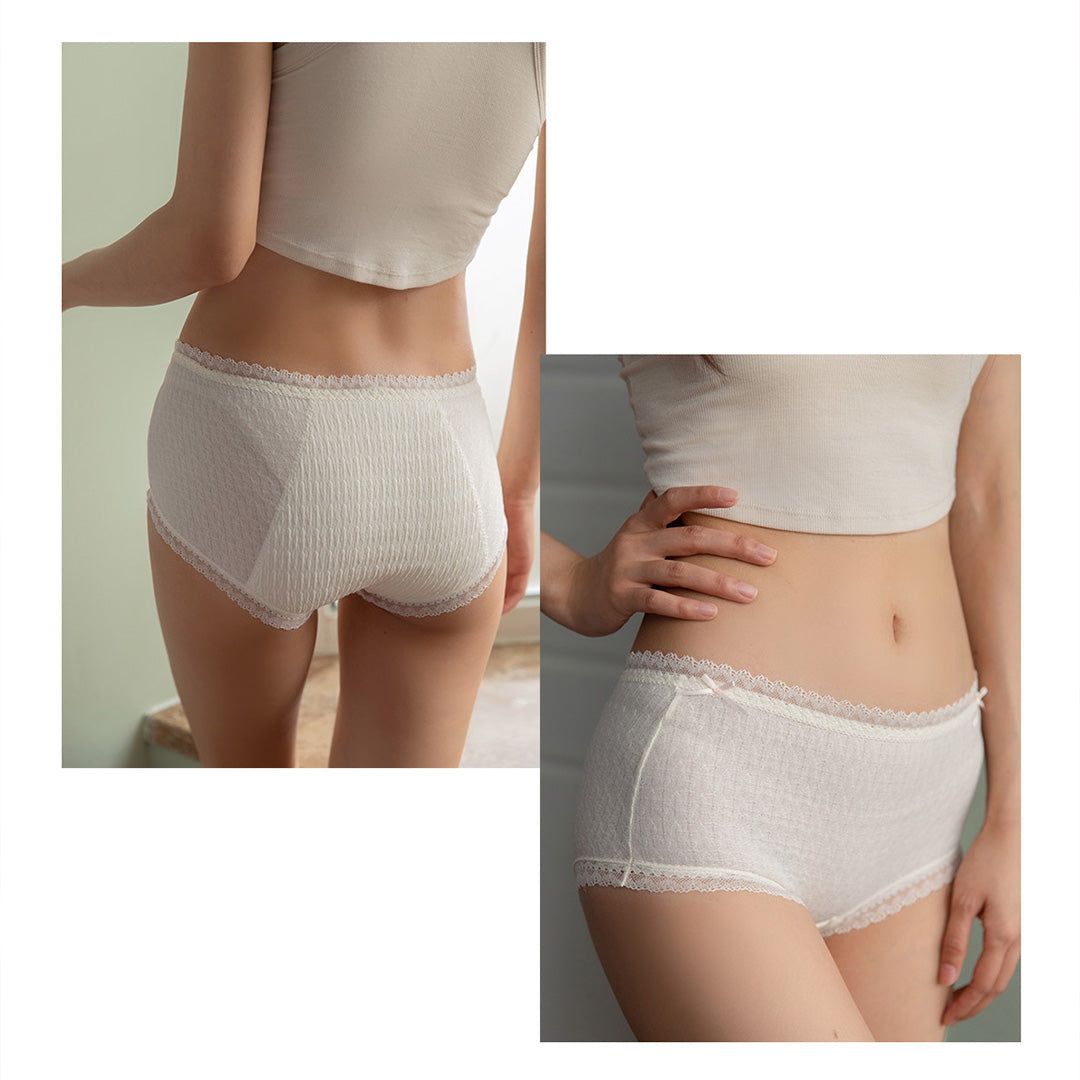
Eau Clair's period panties are designed with the hope that all women can enjoy various activities without restriction, even during their menstrual cycle. Our goal is to make those days feel like any other day, not something special, and you’ll notice the attention we've given to ensuring comfort for the wearer.
Best Points
Special attention must be given to the materials used for period panties, especially during menstruation, when immunity tends to be lower, making Y-zone care particularly important. The use of inappropriate fabrics can lead to skin rashes and the growth of fungal bacteria. Taking this into account, Eau Clair period panties use eco-friendly materials with excellent breathability and moisture absorption for the inner lining, which comes into direct contact with the Y-zone.
In addition to the material, choosing a design that fits your body shape is also crucial. Wearing panties that don’t fit properly can result in leaks. That’s why Eau Clair has created period panties with a wide protective pad and a generously designed inner lining along the thighs to prevent leaks effectively.

6. Tips for Accidental Spills!
How to remove menstrual blood stains from clothes
Here’s how you can clean menstrual blood stains from your precious clothes. First, soak the stained garment in cold water to remove the blood. Be sure to avoid rinsing with warm water, as it can cause the blood to coagulate. After soaking, take the garment out and apply hydrogen peroxide to the stain. Bubbles will form, and the stain will start to fade. Finally, rinse it with cold water, and you'll be able to see your clothes looking as good as new, as if nothing happened.